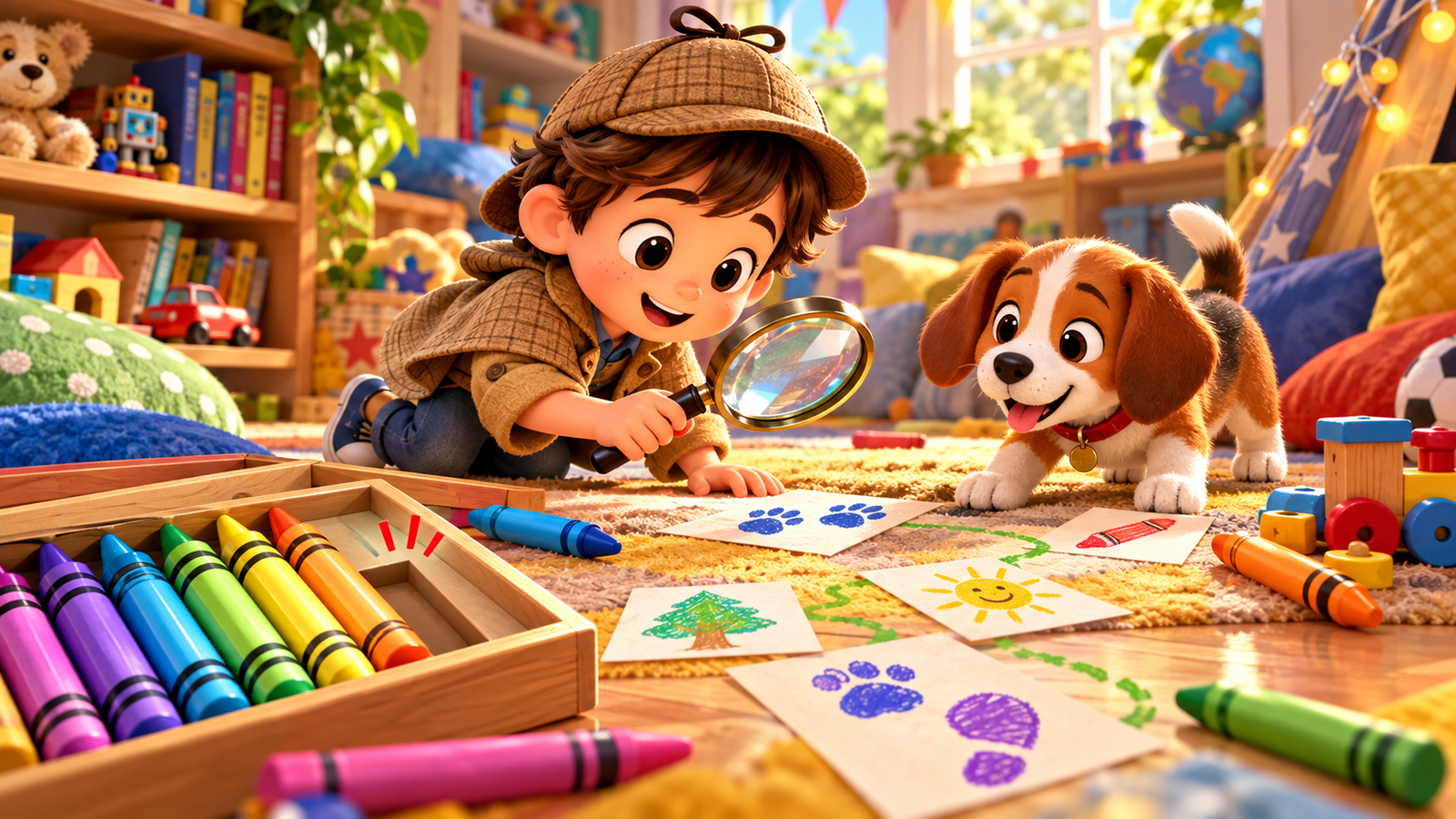
Activity Life Skills
Detective Case: The Vanishing Crayon
Can you solve the mystery of the missing crayon?
- 👧 Ages 4–6
- 🎓 Pre-primary, Kindergarten, Grade 1
- ⏱ 30 minutes
- 🏠 Indoor
- ⚡ Calm
- 👥 1–4 players
What are we doing?
Your mission
Follow the picture clues, solve each small challenge, and find the missing red crayon before the case goes cold.
Stay safe
Safety note
Use washable, non-toxic crayons and child-safe household items. An adult should supervise and keep small objects away from children who may place them in their mouth.
Get ready
Materials needed
- Crayons or washable markers
- Paper or a small detective notebook
- Five picture clue cards
- A toy magnifying glass (optional)
- Tape and child-safe household items for hiding clues
- Stickers or envelopes (optional)
Follow the clues
Your play plan
0 of 5 complete
Step 1
Set Up the Mystery
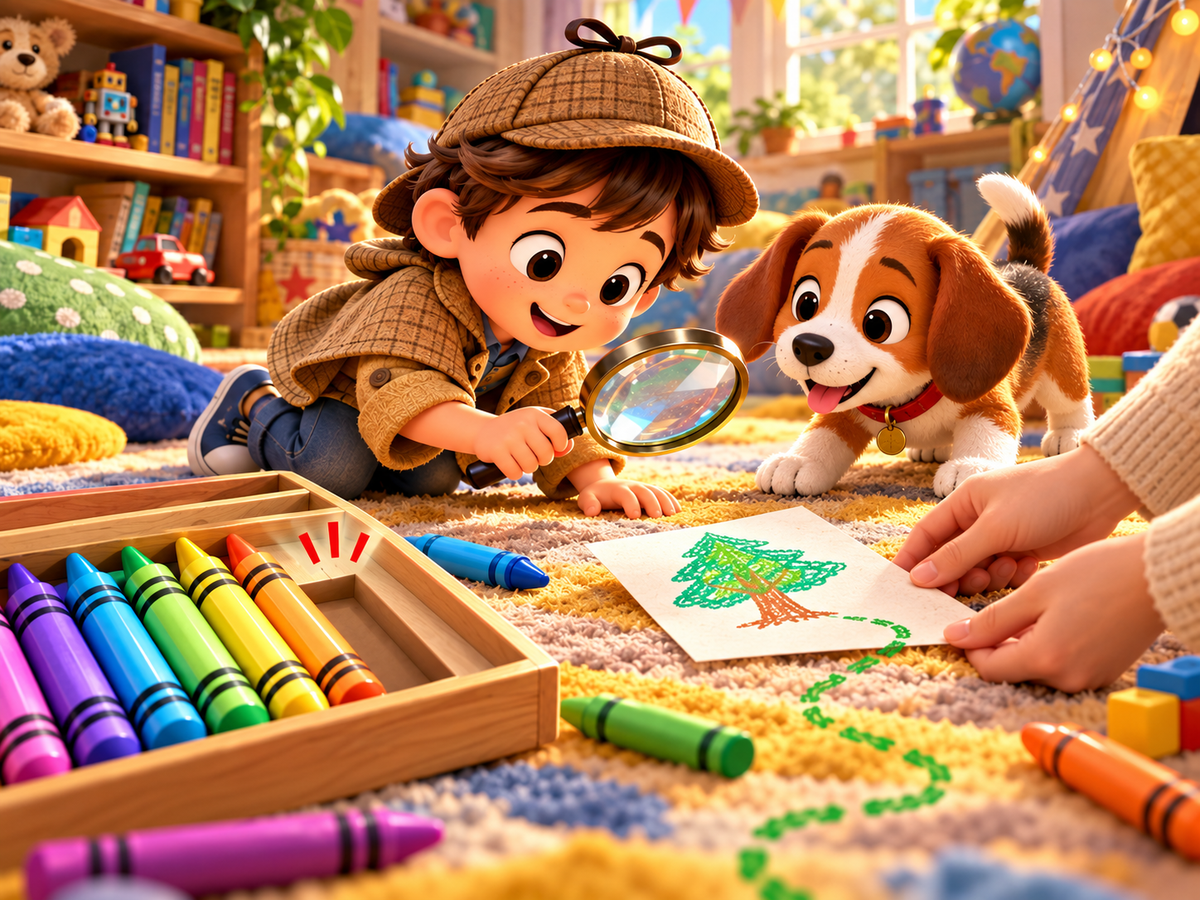
An adult hides one red crayon and places the empty crayon box with the first picture clue.
“Detective, what do you notice first?”
Grown-up tip
Place the crayon somewhere safe and reachable before play begins.
Step 2
Find the Clues
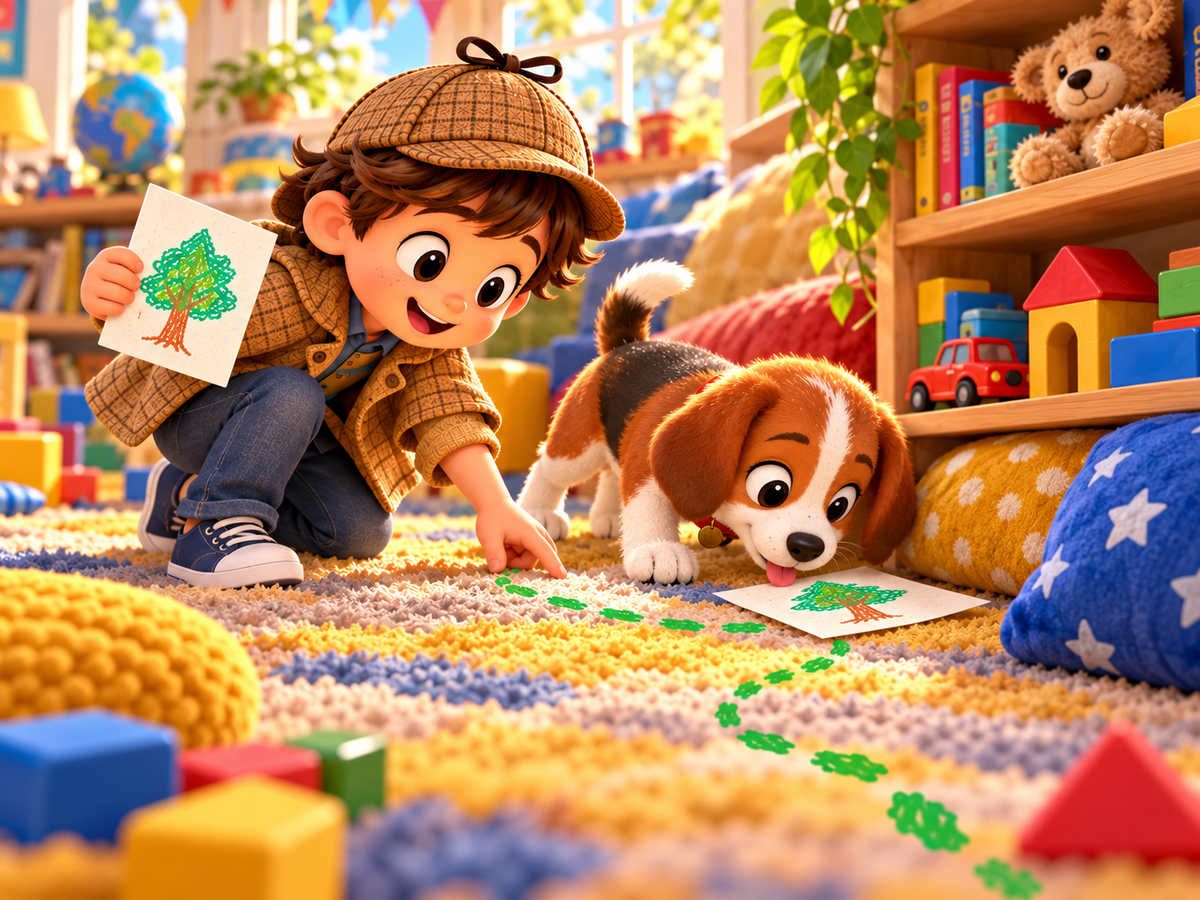
Follow the picture trail around the room. Each clue points toward the next safe hiding place.
“Where could this picture be leading you?”
Grown-up tip
Offer warm-or-cold guidance only if needed.
Step 3
Solve the Challenges
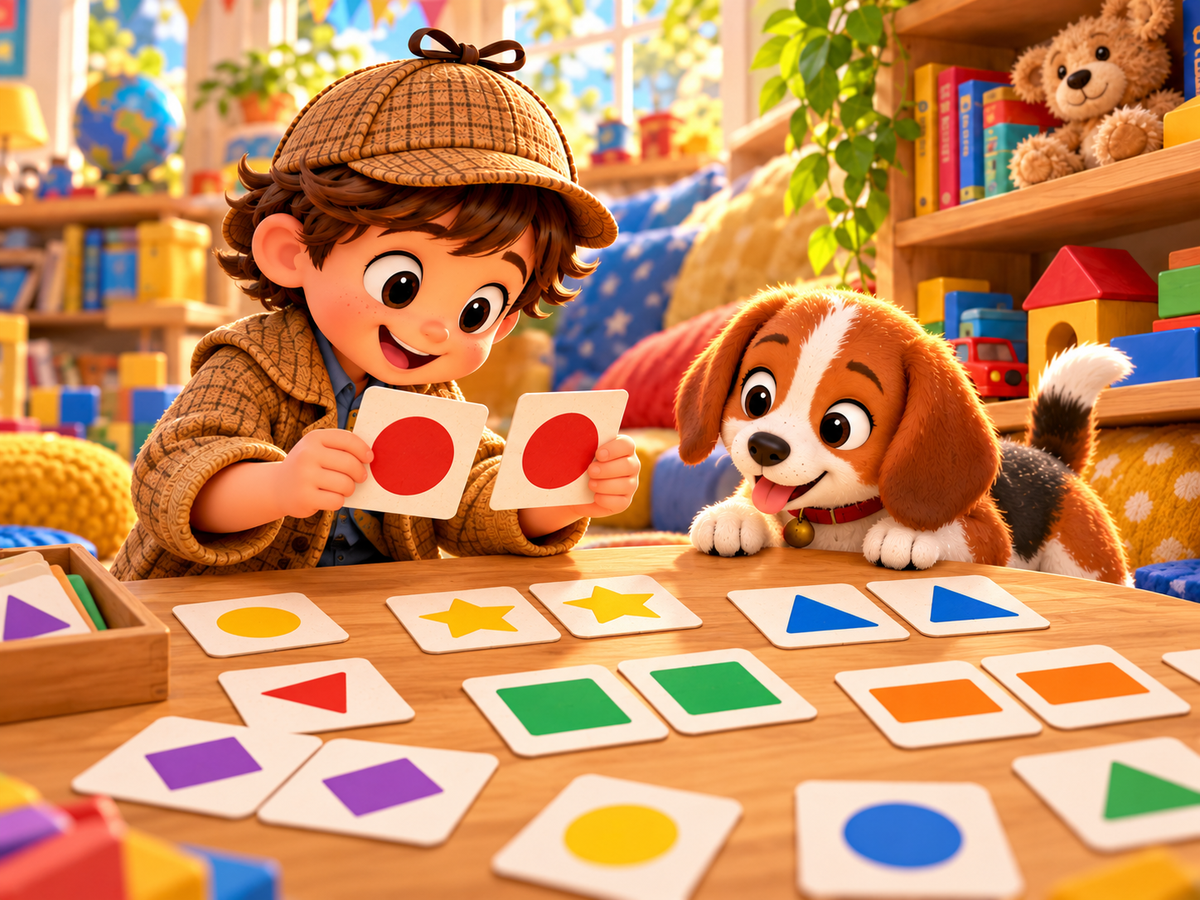
Match the colorful shapes and explain what pattern connects the clue cards.
“Which cards belong together, and why?”
6:00Grown-up tip
Accept different explanations that use visible evidence.
Step 4
Find the Missing Crayon
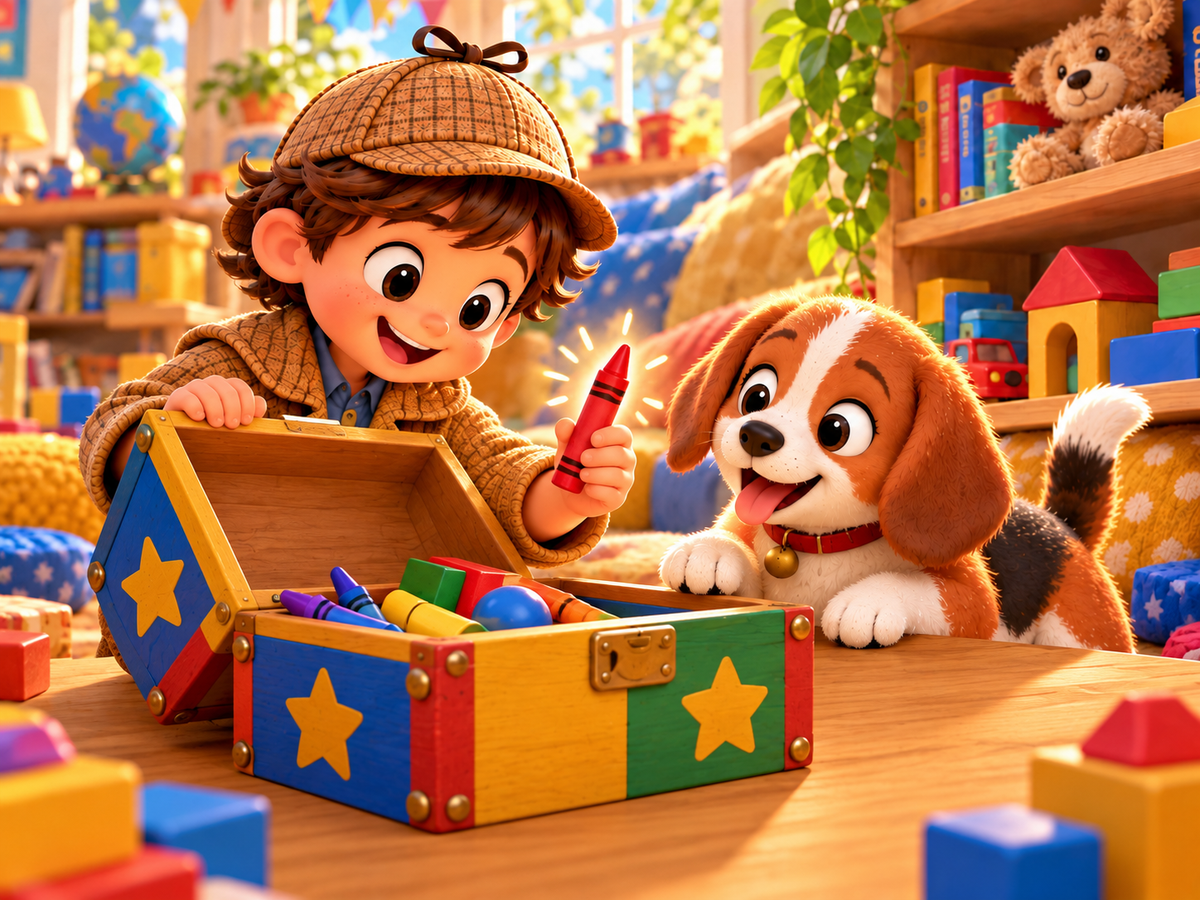
Use the final clue to locate the special box and discover the missing red crayon.
“What does the final clue tell you to check?”
Grown-up tip
Keep the box on the floor or a low table.
Step 5
Mystery Solved
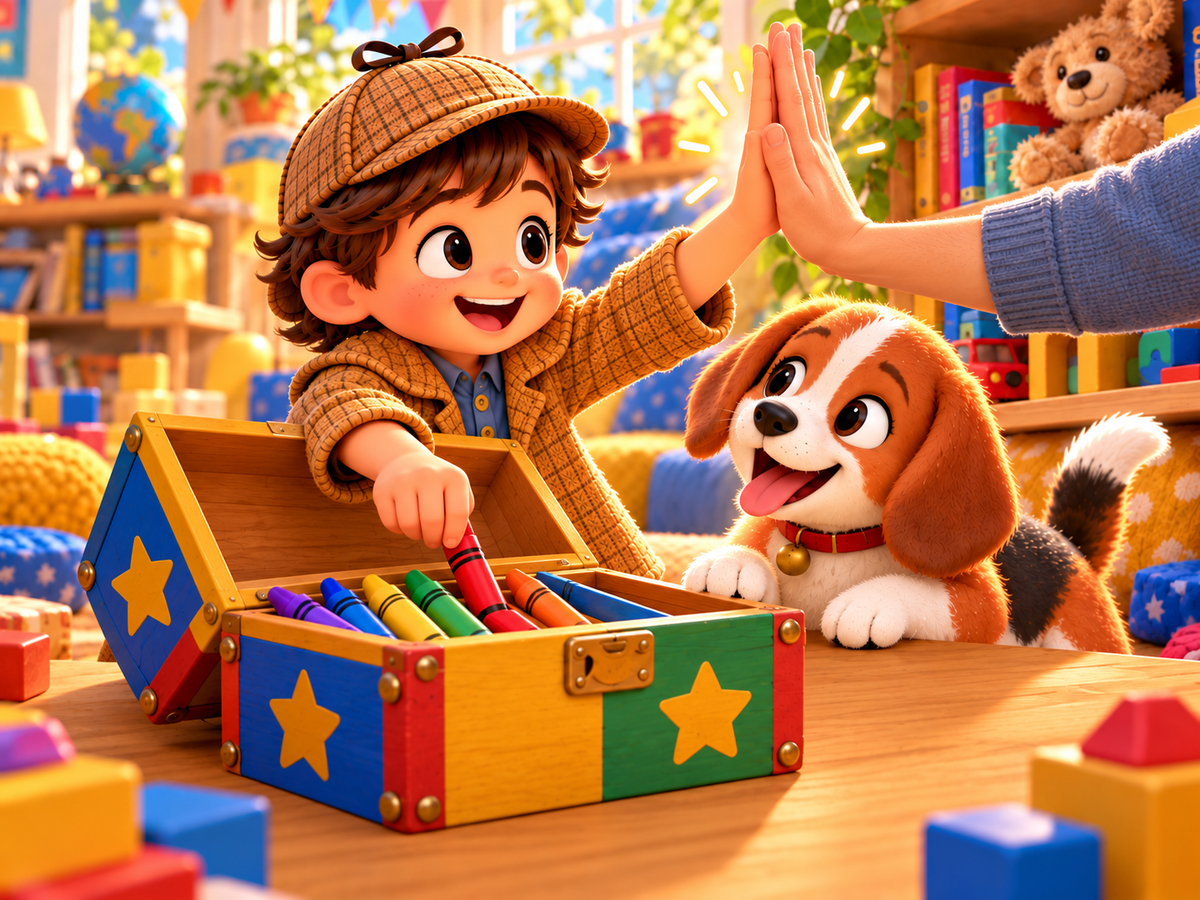
Return the crayon to its box, review the clue trail, and celebrate the detective work.
“Which clue helped you the most?”
Grown-up tip
Invite the child to retell the mystery in order.
Progress is saved only on this device.
Learning and development
Skills children practise
Practise observation, logical thinking, problem solving, creativity, focus, and confident independent decision-making.
- ✓ Observation
- ✓ Logical thinking
- ✓ Problem solving
- ✓ Creativity
- ✓ Focus and concentration
Make it gentler
Easier version
Use three visible clues in one room and offer two possible locations after each clue.
Add a challenge
Harder version
Add decoy clues, a simple picture-code, or ask the detective to design a new clue trail for someone else.
Grown-up corner
For parents
Prepare the clue trail before inviting the child to begin. Ask open questions and allow time for the child to test each idea.
Classroom idea
For teachers
Use pairs or small groups and invite each detective to explain which clue led to the next location.