Activity Science
Airplane Landing Lab
Design, test, and improve a paper airplane landing system.
- 👧 Ages 3–8
- 🎓 Pre-primary, Kindergarten, Grade 1
- ⏱ 20 minutes
- 🏠 Indoor
- ⚡ Moderate
- 👥 1–4 players
What are we doing?
Your mission
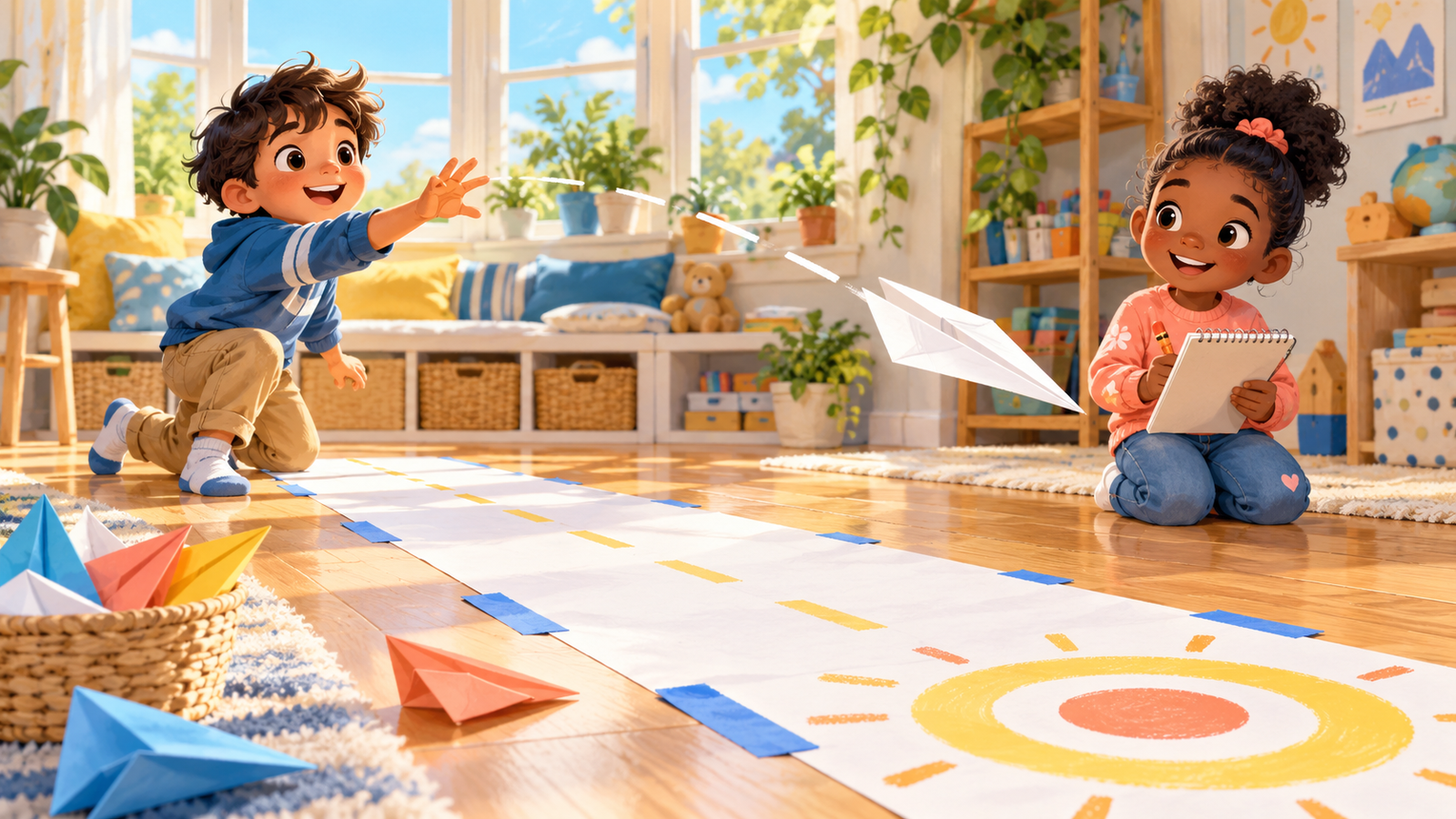
Build a paper airplane, test its landing, improve the design, and complete three successful landings from different starting points.
Stay safe
Safety note
Use only lightweight paper airplanes in a clear indoor area. Never aim at faces, people, animals, windows, fans, lights, or breakable objects.
Get ready
Materials needed
- Paper
- Painter's tape
- Washable crayons
Follow the clues
Your play plan
0 of 4 complete
Step 1
Build the Landing Lab
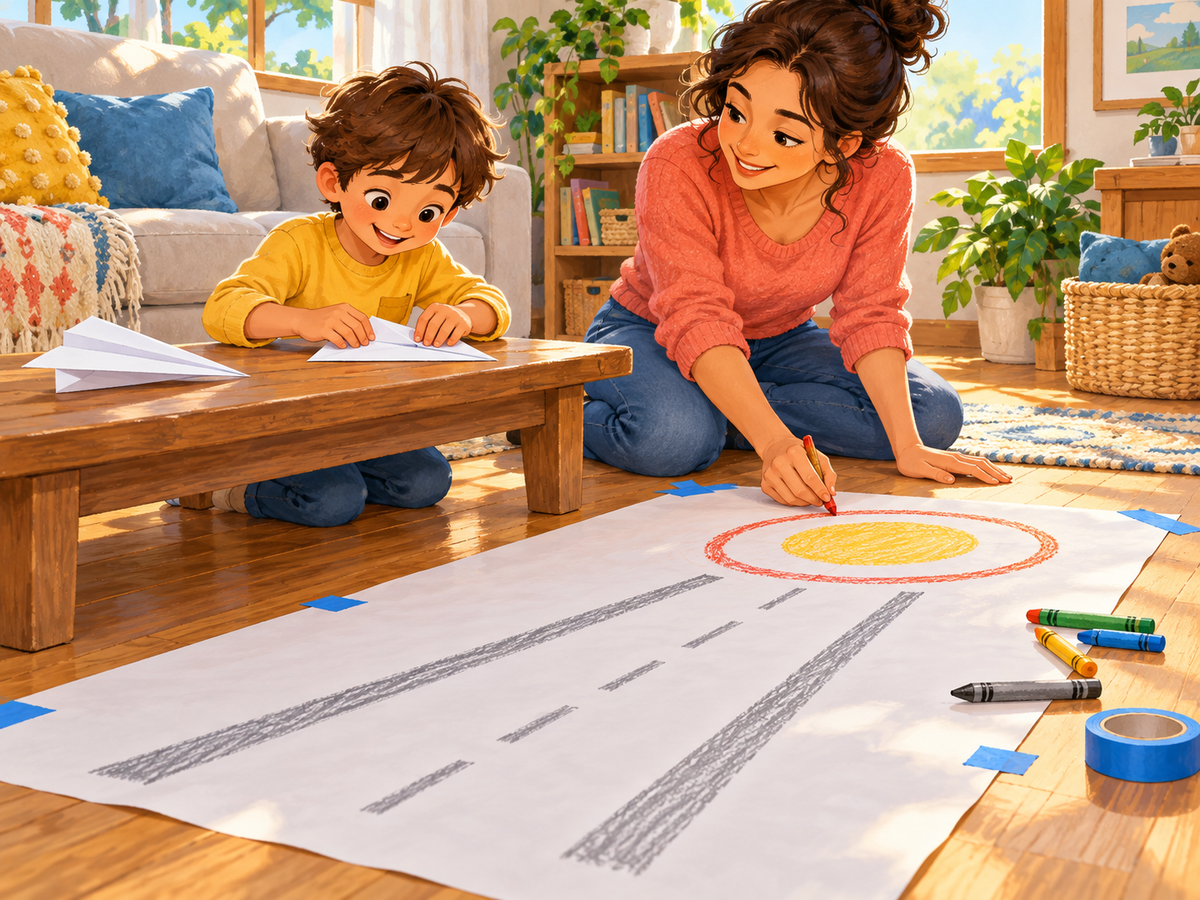
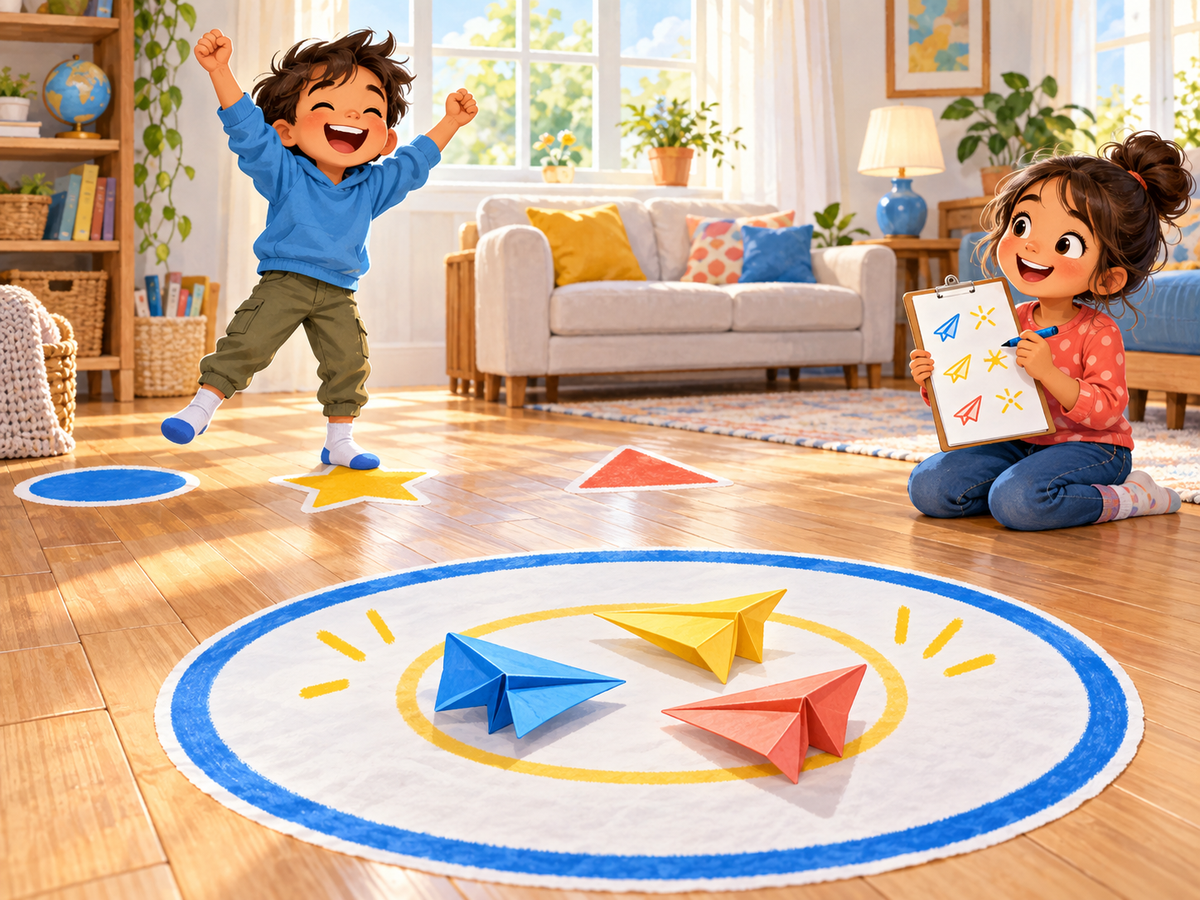
Fold one paper airplane, draw a runway on large paper, and mark a wide landing zone in a clear play area.
“Where should the start line and landing zone go?”
Grown-up tip
Help with folds if requested and check that the entire flight path is clear before testing.
Step 2
Test the First Flight
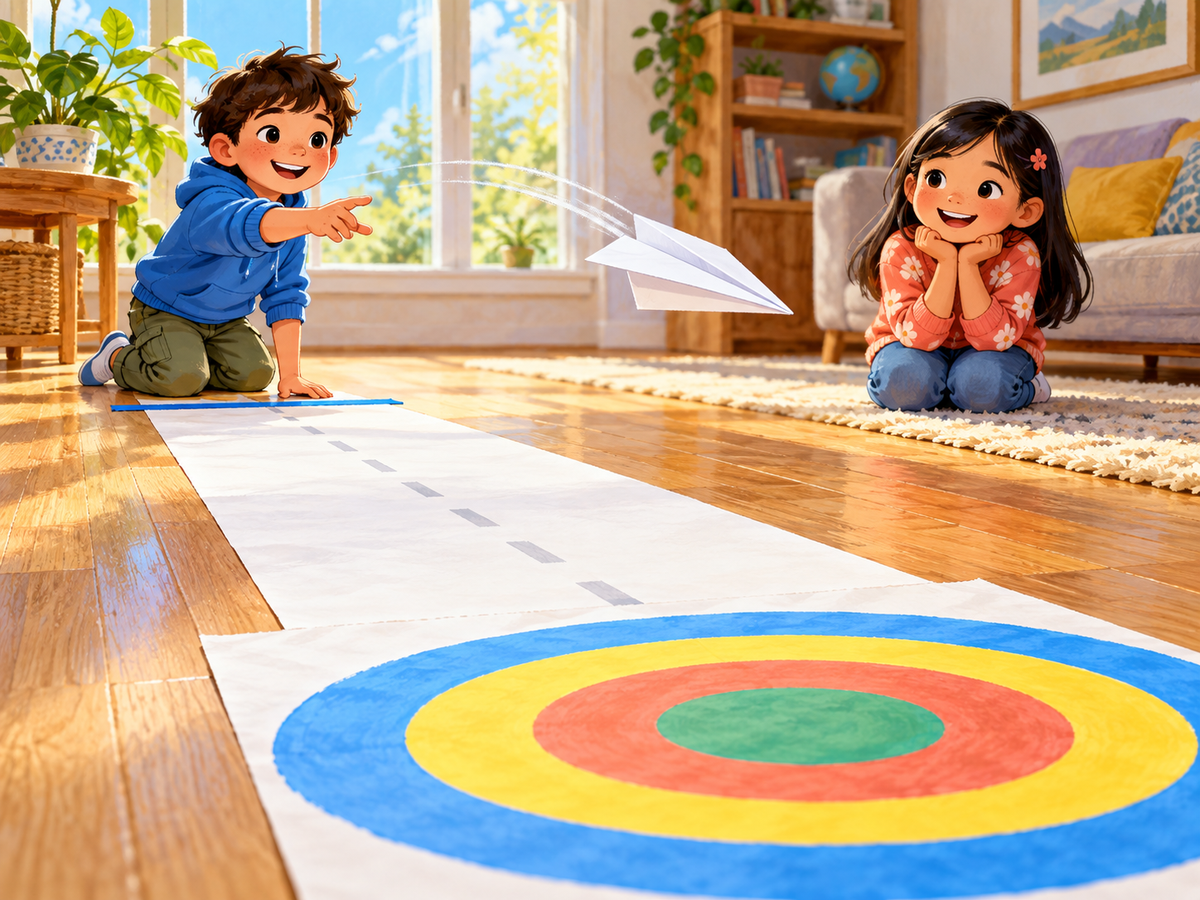
Launch gently from the start line and observe whether the airplane lands before, inside, or beyond the target.
“Where did it land, and what did you notice about the flight?”
Grown-up tip
Keep everyone behind the launch line and describe the result without calling an imperfect landing a failure.
Step 3
Redesign and Retest
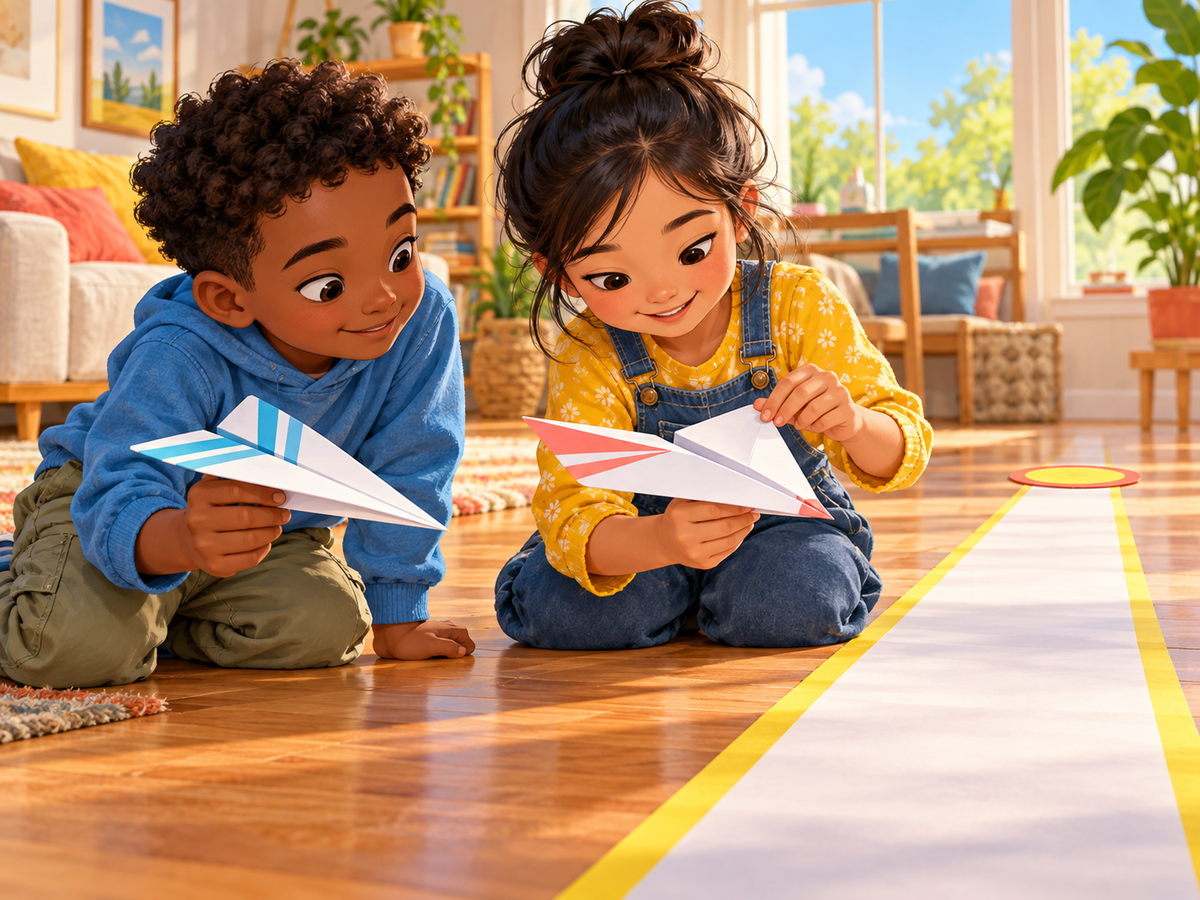
Move or narrow the target, adjust one airplane fold, predict what will change, and test the new design.
“What one change might help your airplane land more accurately?”
Grown-up tip
Change only one feature at a time so the child can compare the results.
Step 4
Complete Three Landings
Choose the best design and try to land it in the zone from three different safe starting points.
“Can your best design land from all three starting places?”
6:00Grown-up tip
Mark safe starting points and reset the room between launches. Stop if anyone enters the flight path.
Progress is saved only on this device.
Learning and development
Skills children practise
Practise prediction, observation, measurement language, design iteration, fine-motor control, and evidence-based problem solving.
- ✓ Observation
- ✓ Experimentation
- ✓ Problem solving
- ✓ Fine-motor skills
- ✓ Prediction
Make it gentler
Easier version
Use a large nearby landing zone and allow the child to launch from one position.
Add a challenge
Harder version
Narrow or move the landing zone, compare two folds, and explain which design lands most reliably.
Grown-up corner
For parents
Prepare a clear flight area and model a gentle throw. Ask what changed between tests instead of trying to make every flight perfect.
Classroom idea
For teachers
Mark individual launch spaces, test one plane at a time, and record landing results with simple pictures or tally marks.